


India–US Trade Tensions Explosive Escalation Trump’s Tariff Threat, Russian Oil Allegations, and the Rupee’s Record Fall
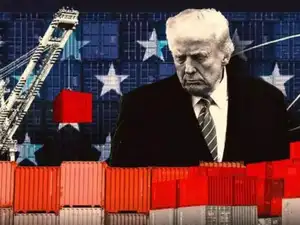
Table of Contents
India–US Trade Tensions: The relationship between India and the United States, often touted as a “strategic partnership,” is facing one of its sharpest tests in years. On August 25, 2025, U.S. President Donald Trump accused India of fueling Russia’s war machine by purchasing cheap Russian oil and reselling it at higher prices in global markets. In retaliation, he announced a proposal for a 50% tariff on Indian goods, triggering alarm in diplomatic circles and rattling Indian financial markets. The rupee plunged past the 88 per dollar mark for the first time, sparking fears of further depreciation toward the 90 level.
india-us trade tensions
This development has amplified existing India–US trade tensions, revived debates on India’s energy security policies, and raised concerns over global supply chains at a time when both nations are also grappling with election cycles and shifting geopolitical alliances.

A lot has changed since Narendra Modi-Donald Trump’s high-stakes White House meeting in February that culminated into a promise to boost bilateral trade to $500 billion by 2030 between the two nations | Credit: X
Section 1: Background of India–US Trade Relations
India and the U.S. share a complex trade relationship marked by collaboration and conflict. Bilateral trade exceeded $200 billion in 2024, making the U.S. India’s largest trading partner. However, disputes over tariffs, market access, and technology transfers have often soured ties. The U.S. has consistently pressed India to reduce its reliance on Russian energy, particularly after the Ukraine war intensified in 2022. India, however, has maintained that discounted Russian oil is crucial for its energy security and economic stability. India–US Trade Tensions.
Previous Flashpoints
- 2018–2019: Trade disputes over steel and aluminum tariffs.
- 2020: U.S. withdrawal of India’s Generalized System of Preferences (GSP) status.
- 2022–2024: Disagreements on digital taxation and e-commerce regulations.
Trump’s latest announcement marks the most severe escalation yet, with implications far beyond trade. India–US Trade Tensions.
Section 2: Trump’s Allegations Against India
During a press conference at the White House, Trump stated:
“India is buying massive amounts of oil from Russia at discounted prices, reselling it to other countries, and making huge profits. This directly helps Russia’s war machine. America will not tolerate this unfair and dangerous practice. We will impose tariffs of at least 50% on Indian goods.”
The accusation has two main elements:
- India’s Russian Oil Imports – India has emerged as one of the largest buyers of Russian crude, importing nearly 1.9 million barrels per day in July 2025.
- Reselling Allegation – Trump alleges that India is refining Russian crude into petroleum products and exporting them to Europe and the U.S. at higher prices.
While Indian officials admit that refined fuels are exported globally, they deny any wrongdoing, insisting that such trade complies with international norms. India–US Trade Tensions.
Section 3: Market Reactions and Rupee’s Record Fall
Financial markets responded immediately. India–US Trade Tensions, The Indian rupee fell to 88.12 against the dollar, its weakest level in history. Equity markets also suffered, with the Sensex dropping 800 points and the Nifty sliding below 22,000.
Factors Driving the Rupee’s Fall:
- Threat of tariffs on Indian exports (especially textiles, pharmaceuticals, IT services).
- Surge in dollar demand amid investor flight to safe assets.
- Global oil market volatility.
- Domestic concerns over inflation and fiscal deficit.
Currency experts warn that if tariffs are implemented, the rupee could breach 90 per dollar within months, significantly raising import costs for India. India–US Trade Tensions.
Section 4: India’s Official Response
The Indian government has strongly rejected Trump’s allegations. External Affairs Minister S. Jaishankar stated:
“India’s energy purchases are guided by national interest and market dynamics. We do not resell Russian oil in the way suggested. Our exports of refined petroleum products are part of legitimate global trade.”
Commerce Minister Piyush Goyal emphasized that unilateral tariffs would violate WTO principles, warning that India could take reciprocal measures.
Prime Minister Narendra Modi, in a brief statement, urged calm but reiterated that India would not compromise on its energy security.
Section 5: Expert Opinions
On Trade:
Economist Raghuram Rajan commented that Trump’s move is more about U.S. electoral politics than genuine trade imbalances.
On Currency:
Foreign exchange analysts at HSBC noted that the rupee’s fall was partly speculative and that actual implementation of tariffs would determine future movements.
On Geopolitics:
Strategic affairs expert C. Raja Mohan observed that the dispute highlights the fragile nature of U.S.–India alignment, particularly when Washington’s global priorities clash with New Delhi’s regional interests.
Section 6: Potential Scenarios
- Escalation Scenario – U.S. imposes 50% tariffs; India retaliates with counter-duties. Trade volumes contract by 20–25%.
- Negotiation Scenario – Quiet backchannel talks lead to a compromise, such as monitoring mechanisms on oil trade.
- Status Quo Scenario – Tariffs remain a threat but are not fully implemented, leaving uncertainty in markets.
Section 7: Broader Implications
For India:
- Rising import bills due to weak rupee.
- Potential loss of export competitiveness in U.S. markets.
- Political pressure on Modi government ahead of state elections.
For the U.S.:
- Higher prices for Indian pharmaceuticals and textiles.
- Strained ties with a key Asian partner in balancing China.
- Potential backlash from U.S. corporations reliant on Indian outsourcing.
For Global Markets:
- Volatility in oil and currency markets.
- Increased pressure on global supply chains already under strain from conflicts and climate disruptions.
Section 8: Historical Context
This is not the first time currency and trade disputes have shaken India–US relations. In the 1970s, similar disagreements arose over India’s state-controlled economy. The 1991 balance of payments crisis also saw tense IMF negotiations with U.S. influence. Today’s conflict, however, combines trade, energy security, and geopolitics in a uniquely combustible mix.
Section 9: Policy Recommendations
- Diversify Export Markets – India should reduce reliance on the U.S. by boosting trade with ASEAN, Africa, and Latin America.
- Currency Stabilization Measures – RBI intervention, foreign exchange reserves utilization, and encouraging FDI inflows.
- Diplomatic Engagement – Urgent dialogue mechanisms with Washington to clarify allegations and negotiate solutions.
- Energy Strategy – Broader diversification beyond Russian oil to avoid overdependence on geopolitically risky suppliers.
Section 10: Future Outlook
The coming weeks will be crucial. Trump’s tariff threat may remain rhetorical, but markets are already pricing in worst-case scenarios. Whether India–US trade tensions spiral into a full-fledged economic confrontation or are defused through diplomacy will depend on high-level political engagement.
Press Release Summary
FOR IMMEDIATE RELEASE
Date: August 30, 2025
India has rejected allegations made by U.S. President Donald Trump that it is reselling Russian oil at inflated prices to fund Russia’s war machine. Trump threatened tariffs of up to 50% on Indian goods, triggering a historic fall in the rupee past 88 per dollar. The Indian government emphasized that its energy policies are guided by national interest and global trade norms. Economists warn that a prolonged trade dispute could weaken both economies and disrupt global markets.
Social Media Briefing
Twitter/X:
🇮🇳🇺🇸 Trade tensions spike! Trump accuses India of reselling Russian oil, threatens 50% tariffs. Rupee hits record 88/USD. What’s next? #IndiaUSTrade #TrumpTariff #Rupee
LinkedIn:
India–US trade relations face a serious challenge after President Trump threatened 50% tariffs on Indian goods over Russian oil imports. The rupee has fallen to record lows. Businesses and policymakers must prepare for turbulent times ahead.
Instagram/Facebook Caption:
📉 Rupee at record low. ⚡ Trump threatens 50% tariffs on India. 🇮🇳🇺🇸 Trade tensions rise as oil politics heats up. #IndiaUSTrade #TrumpTariff #RupeeCrisis
FAQ for Policymakers
Q1: Why did Trump accuse India?
Trump alleges India is reselling Russian oil at high profits, indirectly supporting Russia’s war effort.
Q2: Is this claim true?
India denies wrongdoing, stating that refined petroleum exports are part of normal global trade.
Q3: What is the immediate impact?
Rupee has fallen past 88 per dollar, stock markets have tumbled, and exporters are concerned.
Q4: What could happen next?
If tariffs are imposed, bilateral trade may shrink sharply; negotiations remain possible.
Q5: What can India do?
Diversify trade, stabilize the rupee, and engage diplomatically with Washington.
Conclusion
The escalating India–US trade dispute underscores how geopolitics, energy security, and financial markets are deeply intertwined. Trump’s accusations and tariff threats may be politically motivated, but they have real consequences for currencies, companies, and consumers. Whether diplomacy prevails or confrontation deepens will shape not only the India–US partnership but also the trajectory of the global economy in 2025.
One thought on “India–US Trade Tensions Explosive Escalation Trump’s Tariff Threat, Russian Oil Allegations, and the Rupee’s Record Fall”