


4 city of South India Bullet Train: Hyderabad, Chennai, Amaravati & Bengaluru to Join India’s High-Speed Future
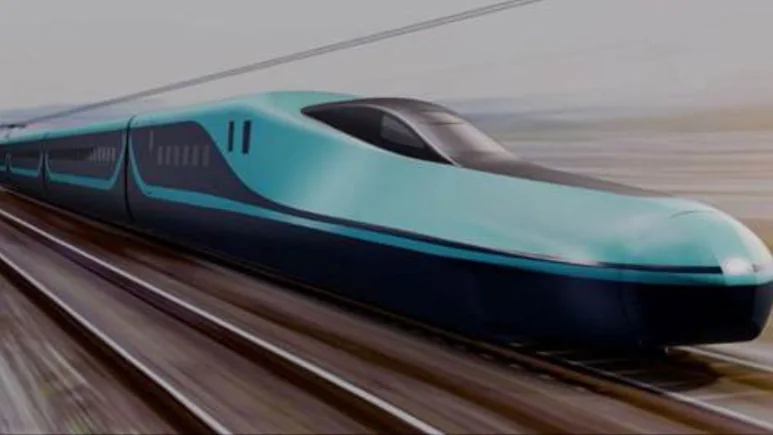
Table of Contents
A New Era of Speed in South India
The South India bullet train project has officially moved a step closer to reality. Andhra Pradesh Chief Minister N. Chandrababu Naidu recently announced that a survey has been ordered to connect four major cities—Hyderabad, Chennai, Amaravati, and Bengaluru. This announcement has sparked excitement across the region, as it represents not just a transportation upgrade but a transformation of South India’s economic and cultural future.

Why South India Bullet Train is a Game-Changer
The South India bullet train is not an ordinary rail project—it’s a giant leap into the future. With a potential speed of 320–350 km/h, the high-speed corridor will cut down travel times drastically. Journeys that today take over 10 hours could be completed in 3–4 hours. This speed will not only make travel convenient but also redefine how businesses, tourists, and families interact with the region.
Mapping the Route: From Hyderabad to Bengaluru, future of Indian Railways
According to preliminary plans, the South India bullet train will connect:
- Hyderabad – India’s IT and biotech powerhouse
- Amaravati – Andhra Pradesh’s emerging capital city
- Chennai – a manufacturing and port hub
- Bengaluru – the nation’s technology and startup capital
This corridor effectively integrates industrial hubs, government headquarters, and cultural centers, ensuring that the South India bullet train serves the needs of both the economy and the people.
Economic Impact: Billions on the Fast Track
Experts believe the South India bullet train could contribute billions to the region’s economy. The corridor will:
- Strengthen supply chains between Chennai’s port and Bengaluru’s IT exports.
- Allow Hyderabad’s biotech and pharma industries to access larger markets.
- Provide Amaravati with rapid connections to established metros.
For businesses, the South India bullet train means reduced logistics costs, faster access to clients, and new investment opportunities.
Tourism Transformation with South India Bullet Train
The tourism sector stands to gain immensely from the South India bullet train. South India is home to world-famous temples, heritage monuments, beaches, and modern attractions. With faster connections, tourists could plan multi-city trips in a matter of days. Imagine starting a journey at Chennai’s Marina Beach, visiting Hyderabad’s Charminar, exploring Bengaluru’s nightlife, and experiencing Amaravati’s planned cultural hubs—all within a single week, thanks to the South India bullet train.
Environmental Benefits: A Greener Future
Transportation is a major contributor to pollution, but the South India bullet train promises a greener solution. High-speed trains run on electricity, reducing dependence on fossil fuels. By replacing thousands of daily flights and long highway drives, the corridor could cut carbon emissions significantly. The South India bullet train is aligned with India’s commitment to clean energy and sustainable mobility.
India–Japan Collaboration: Shinkansen Inspiration

A major highlight boosting the South India bullet train dream was Prime Minister Narendra Modi’s recent bullet train journey in Japan with Prime Minister Shigeru Ishiba. Riding the iconic Shinkansen from Tokyo to Sendai, Modi observed Japan’s ALFA-X train—the world’s fastest prototype. This collaboration signals that Japan’s expertise could be directly applied to the South India bullet train corridor. With Japan already backing the Mumbai–Ahmedabad project, experts expect similar support for South India.
The Challenges on the Track
While hopes are high, the South India bullet train must navigate serious challenges:
- Land acquisition: Acquiring land across four major cities can be politically sensitive.
- Funding: High-speed rail projects require massive investments, often running into billions of dollars.
- Technical hurdles: Building viaducts, tunnels, and elevated tracks in congested urban areas will demand advanced engineering.
Despite these obstacles, the government’s commitment and Japan’s partnership make the South India bullet train a strong possibility rather than a distant dream.
Public Sentiment and Expectations
Public response to the South India bullet train has been overwhelmingly positive. Urban commuters see it as a way to save time, students view it as an opportunity for better access to education, and business leaders expect faster trade and meetings. However, some concerns remain about affordability, ticket pricing, and whether rural communities along the route will also benefit from the South India bullet train.
South India Bullet Train in the Context of National Projects
India already has multiple bullet train projects under planning:
- Mumbai–Ahmedabad corridor (construction in progress)
- Delhi–Varanasi corridor (survey stage)
- Chennai–Mysuru corridor (planned)
- Hyderabad–Bengaluru corridor (proposed)
By adding Hyderabad, Amaravati, Chennai, and Bengaluru, the South India bullet train becomes a vital part of India’s larger “Diamond Quadrilateral” vision for high-speed rail.
Political and Diplomatic Dimensions
The South India bullet train also carries political weight. For Naidu, announcing the survey shows Andhra Pradesh’s intent to position itself as a leader in modern infrastructure. For Modi, his symbolic Shinkansen ride with Ishiba strengthens the India–Japan relationship while also sending a signal that India is serious about high-speed transformation. The South India bullet train is therefore both a domestic and international statement.
Looking Ahead: The Future of South Indian Connectivity
Once completed, the South India bullet train will change how the region is perceived. Instead of being separated by long travel times, Hyderabad, Amaravati, Chennai, and Bengaluru will feel like one integrated megapolis. The project has the power to reshape real estate, job markets, tourism flows, and investment trends. The survey is only the first step, but it marks the beginning of a historic journey.

FAQs on South India Bullet Train
Q. Which cities will be connected by the South India bullet train?
The South India bullet train will connect Hyderabad, Amaravati, Chennai, and Bengaluru.
Q. How fast will the South India bullet train be?
The trains will run at speeds up to 320–350 km/h.
Q. When will the South India bullet train project start?
The survey has been ordered. Construction timelines will be announced after approvals.
Q. Who is supporting the South India bullet train?
The Government of India, the Andhra Pradesh state government, and likely Japan through technology and financing support.
Q. How will the South India bullet train impact the economy?
It will boost trade, tourism, connectivity, and attract foreign investments to South India.
Conclusion: A Fast-Arriving Dream
The announcement of a survey for the South India bullet train corridor has ignited excitement across the nation. With Japan’s partnership, India’s political will, and South India’s massive population base, the project holds transformative potential. Whether it is businesses looking for speed, tourists seeking adventure, or citizens hoping for comfort, the South India bullet train could be the revolution that redefines how India moves.