Nepal Social Media Ban: Big Decision on 26 Platforms
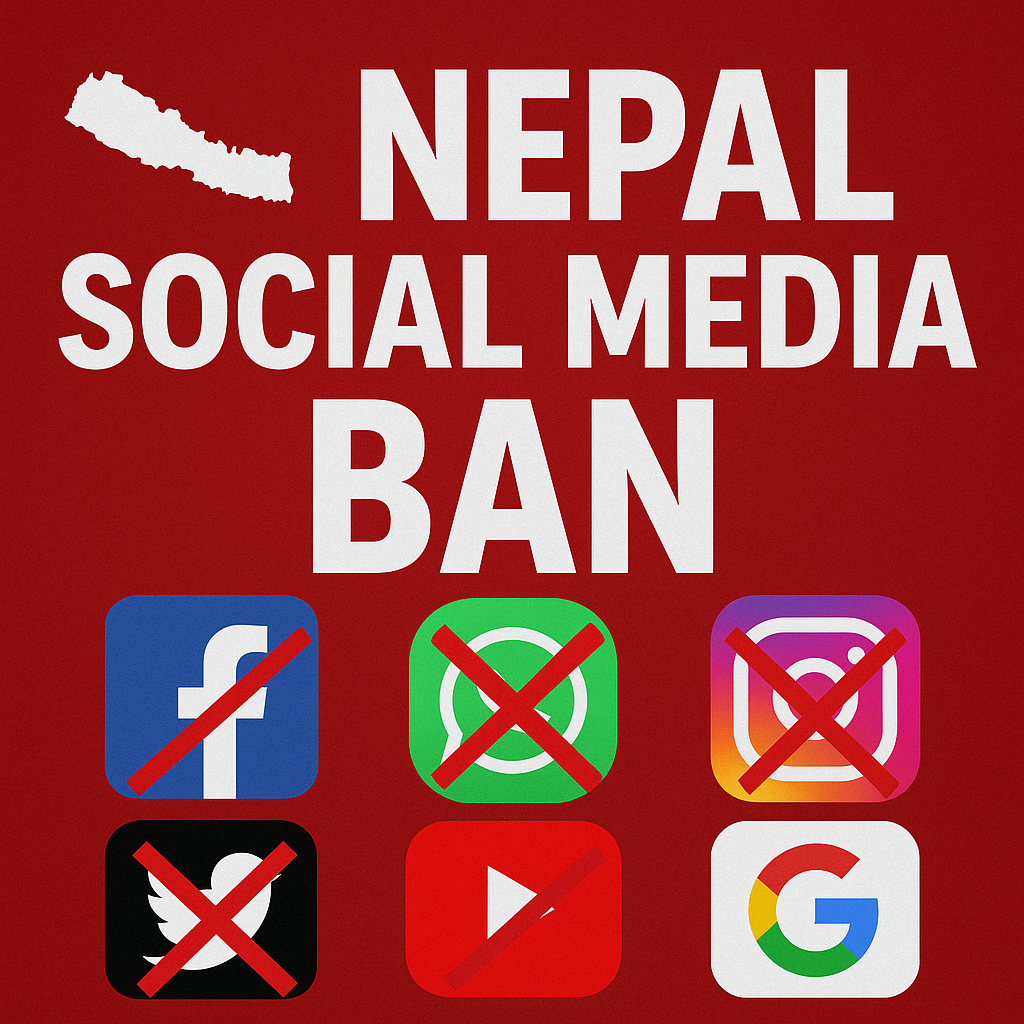
Table of Contents
Nepal Social Media Ban Shakes Digital World
The Nepal social media ban has become one of the most surprising and controversial government decisions in South Asia. With Facebook, WhatsApp, Instagram, X (formerly Twitter), YouTube, and Google among the 26 banned platforms, millions of users in Nepal are now cut off from their favorite digital spaces. This move by the Nepal government has sparked widespread debates on freedom of expression, digital regulation, and the future of online communication in the country.
Why Did the Nepal Government Enforce the Social Media Ban?

The ban on social media did not come overnight. The government had earlier directed all platforms to register with the Ministry of Communication and Information Technology. A seven-day deadline was given, but many tech giants ignored the order. As a result, in Thursday’s cabinet meeting, the government decided to enforce the ban on all non-compliant platforms.
Nepal Telecom has been ordered to deactivate access, ensuring that the Ban social media ban is implemented strictly across the country.
Which Platforms Are Banned Under the Nepal Social Media Ban?
The Nepal ban social media covers some of the most popular platforms globally. The ban includes:
- X (formerly Twitter)
- YouTube
- Snapchat
- Telegram
- And several others
Only a few apps like TikTok, Viber, Nimbuzz, Witk, and Popo Live completed registration, so they remain operational in Nepal.
Impact of the Nepal ban Social Media on Daily Life
The ban on social media is affecting people in multiple ways:
- Communication Disruption: Students, professionals, and families relied on WhatsApp, Messenger, and Instagram for daily communication.
- Business Losses: Digital marketing, e-commerce, and online businesses depended heavily on Facebook Ads, YouTube, and Google services.
- Entertainment Gap: Platforms like YouTube, Instagram Reels, and Facebook videos were prime sources of entertainment.
- Information Block: News sharing and awareness campaigns have been disrupted.
The sudden ban on social media has left users frustrated and searching for alternatives.
Government’s Perspective on the Nepal Social Media Ban
From the government’s side, the Nepal ban social media is not just about censorship. Authorities argue that registration is essential for:
- Tax collection from global tech companies
- Monitoring harmful and fake content
- Ensuring national security
- Promoting local digital platforms
By enforcing the Nepal social media ban, the government hopes to push international companies to follow local laws and be accountable in Nepal’s digital space.
Public Reaction to the Nepal Social Media Ban
The ban on social media has drawn mixed reactions:
- Criticism: Many see it as an attack on freedom of speech and internet freedom.
- Support: Some citizens believe it is necessary to regulate harmful content and cybercrimes.
- Confusion: Young users, especially students and entrepreneurs, feel left out and disconnected.
The Nepal social media ban is trending not only in Nepal but also in global media discussions.
Alternatives After the Nepal Social Media Ban
With the Nepal ban social media in place, users are shifting to the few registered apps:
- TikTok: Already popular, now gaining even more traction.
- Viber: Becoming a primary messaging platform.
- Local apps: Startups and regional apps may see growth due to the ban.
However, the lack of global connectivity after the ban on social media remains a serious concern.
Global Reactions to the Nepal Social Media Ban
The social media ban on Nepal has caught the attention of international media. Experts argue that this sets a precedent for other countries struggling with regulating big tech. While some governments may find the move inspiring, others see it as a step toward digital isolation.
Will the Nepal Social Media Ban Last Long?
The big question now is whether the Nepal social media ban will be temporary or permanent. Experts believe that global giants like Meta (Facebook, Instagram, WhatsApp) and Google may eventually comply with the registration requirement, after which the ban could be lifted.
Conclusion: Is the Nepal Social Media Ban the Right Step?
The Ban on social media is a double-edged sword. On one hand, it ensures accountability of global platforms, but on the other, it disrupts communication, business, and access to information for millions of citizens. Only time will tell whether this bold move strengthens Nepal’s digital sovereignty or weakens its global connectivity.
FAQs on Nepal ban on Social Media
1. What is the Nepal social media ban?
The Nepal government banned 26 platforms, including Facebook, WhatsApp, and YouTube, for not registering with the IT ministry.
2. Which platforms are still working in Nepal after the ban?
Only TikTok, Viber, Nimbuzz, Witk, and Popo Live are legally operational.
3. Why did Nepal impose the social media ban?
The ban was enforced because platforms ignored the government’s order to register within seven days.
4. How does the Nepal social media ban affect businesses?
It has disrupted digital marketing, e-commerce, and online communication, causing financial losses.
5. Is the Nepal social media ban permanent?
It may be temporary. Once companies comply with the registration rule, the ban could be lifted.